
Why the Xplorer is the Answer in the U.S. Drone Industry: The Drone Built for Real Work.
Selecting a drone often begins with a focus on technical specifications such as flight time, control range, and performance metrics. But the true value of the Xplorer goes far beyond numbers and features. We listened to and learned from our customers, recognizing that the drone is only one part of the equation.
The Xplorer is designed with a deep understanding of the entire workflow and a strong focus on the user experience. Every part of the process must work together to deliver a cohesive, efficient workflow. This post outlines the reasons to consider adopting the Xplorer platform, not just for what it can do, but for how it empowers end users to deliver the highest-quality work that truly matters.
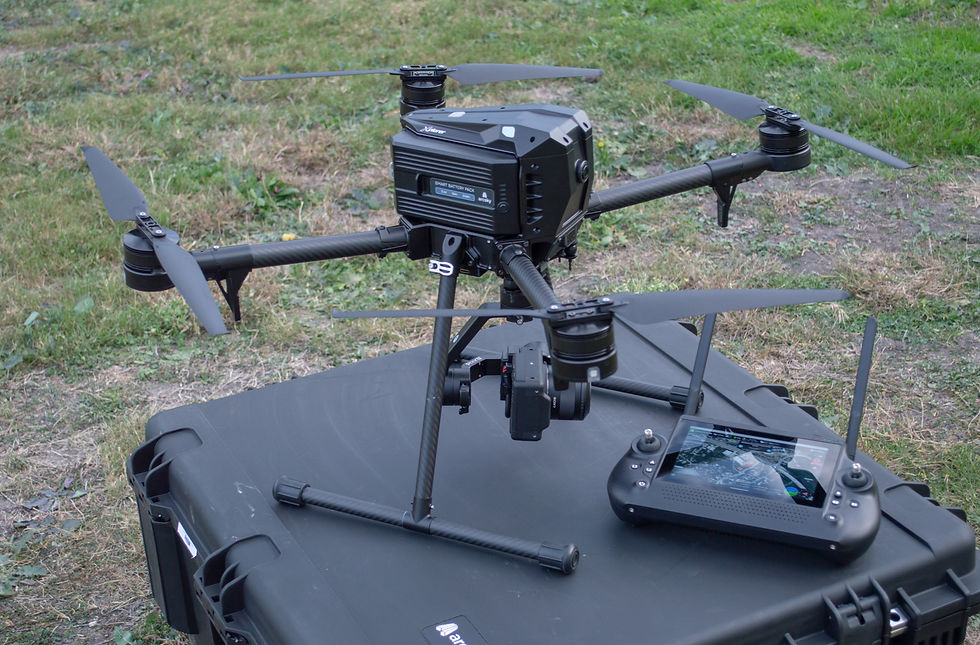
Dependable, Every Time. Confidence in Every Flight.
Reliability is one of the most important factors when it comes to drone flights. Nothing matters if you cannot trust your equipment to deliver results. The Xplorer uses an advanced flight controller featuring triple IMU redundancy with temperature control for precise navigation. The onboard RTK-enabled GNSS module supports up to five satellite constellations across the L1 and L5 bands, enabling highly accurate GNSS positioning. Redundant internal power modules ensure that no single point of failure can compromise critical navigation systems.
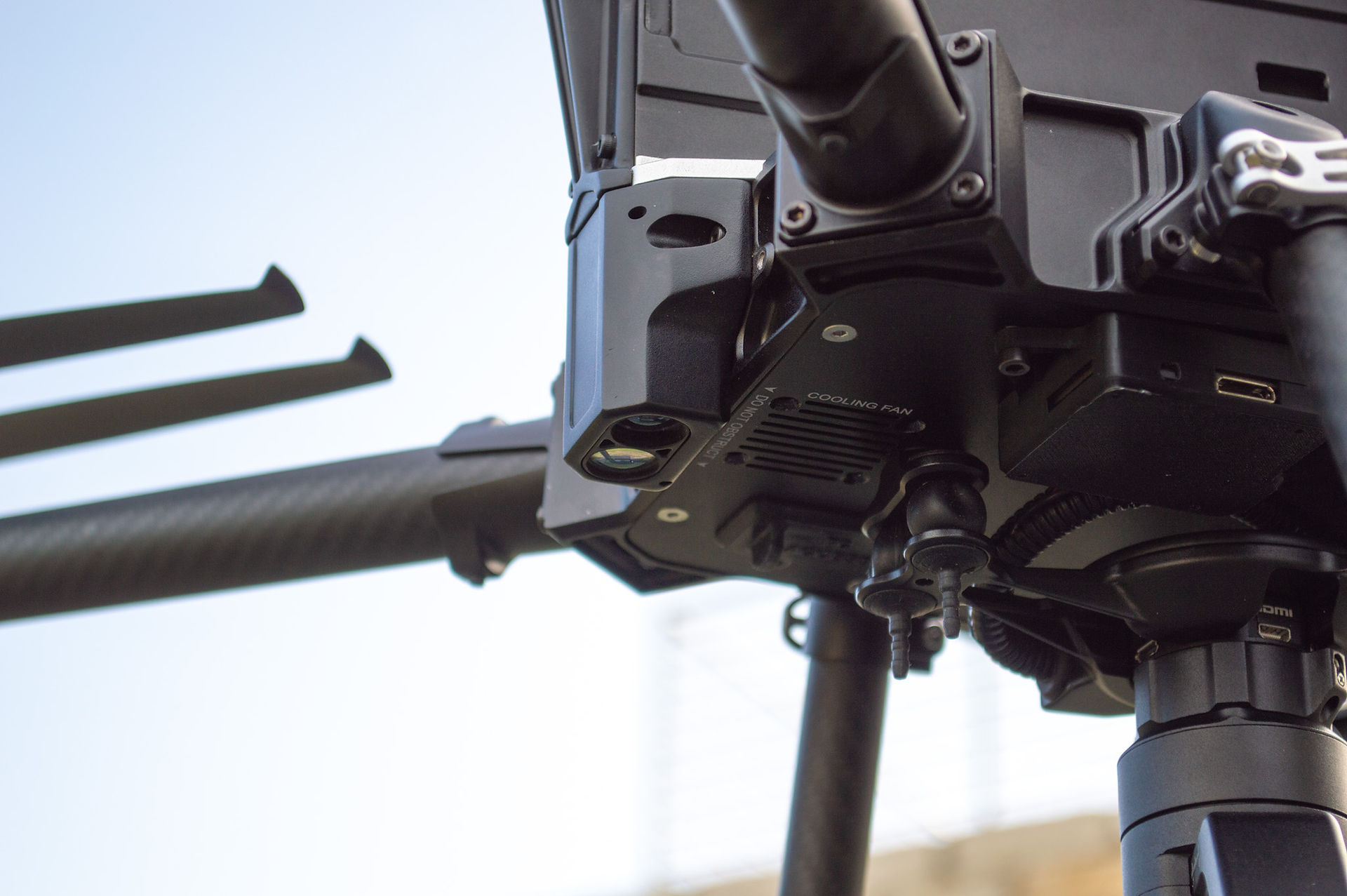


Built-in safety sensors, including a forward-facing obstacle avoidance sensor, First Person View (FPV) camera, downward-facing rangefinder, and CAN-enabled motors, give users greater awareness of their surroundings and insight into the system’s status.

The Xplorer’s battery features an advanced, in-house developed battery management system to ensure optimal performance. It includes internal monitoring, precise state-of-charge estimation, and temperature monitoring to detect anomalies, along with numerous other advanced features designed to keep the cells healthy and reliable.
The dual-battery setup provides redundancy. With each battery capable of supporting up to 40A continuous/ 160A peak discharge. In the event one battery fails, the drone can continue operating on the remaining battery, allowing it to safely return to its landing point.

2-Minute Setup. Zero Tools.
When it comes to offsite work, quick setup is key. Fewer steps and tools for end users to remember help minimize the risk of mishaps. With the Xplorer, all you need to do is power on the controller, install the landing gear, attach the payload, and insert the battery packs. That’s it. Once the system initializes, you’re ready to go.


The case features MIL-standard waterproofing and dust-proofing to protect your equipment, with built-in wheels for easy travel. It also includes additional cutouts for extra batteries and chargers. With combined linear dimensions of less than 80 inches, the Xplorer case can be checked on any commercial airline in the U.S., making it convenient to travel for work.
Rugged, Ergonomic Controller.
One device that often gets overlooked is the controller. It is the backbone of the user experience in drone operations and the interface the pilot interacts with the most. We understand this, which is why the Xplorer’s controller is designed with real workflows in mind, providing confident and precise control of your drone.
The controller features a large 7-inch touchscreen display, a powerful battery capable of up to 6 hours of continuous use without charging, supports USB-C fast charging while the controller is in use, has a built-in cooling fan for hot weather operation and an effective range of up to 5 km. In addition, it also includes a generous selection of buttons and knobs for payload control, such as gimbal movement and trigger functions. This is especially valuable for workflows where precise gimbal control is critical.
The controller supports data sharing via Ethernet and Wi-Fi, allowing users to stream telemetry to a laptop or operate a secondary ground control station (GCS) such as UgCS or QGroundControl Desktop. It also features a full size HDMI port for screen mirroring, as well as a USB-A port for auxiliary accessory attachment.
Best of all, this controller is fully NDAA-compliant, has a built-in GNSS module for remote ID compliance, and is FCC certified.


Simple, Yet Powerful Flight Software at Your Fingertips.
A powerful controller is only as good as the flight software on it. All Xplorers come pre-installed with Arcsky Control Flight Software, providing everything you need to operate your Xplorer efficiently. Some of its key features include:

Built-in NTRIP Service Support. Users only need to enter the credentials for the NTRIP service they are using, and the Xplorer will be ready to receive RTK corrections. If an internet connection is not available, the RTK base method is also supported.
Automated Mission Planning. Plan missions, add waypoints, survey polygons and corridors, and adjust mission parameters such as flight speed, altitude, and camera settings, all under the plan page of Arcsky Control.
On-the-Fly Flight Parameter Adjustment (Mission Speed, RTL Altitude). No more clicking into nested pages just to change frequent settings. A simple icon above the top tool bar allows user to change mission speed and RTL altitude on the fly.
Quick Payload Selection. With the simple click of a button, you can select the payload you're using and the Xplorer will automatically configure the system, adjusting parameters without requiring manual setup by the user.
Dual Video Stream Selection. The Xplorer comes standard with a built-in FPV camera to provide the pilot with situational awareness. When a camera payload is attached, users can switch between different video feeds with just one click.
This powerful software allows users to operate the Xplorer seamlessly, keeping advanced features and functions easily accessible. No need to navigate multiple pages or connect to separate applications for settings and adjustments.
Seamless Payload Swaps and Workflow.
Drone workflows can be complex on their own, and payloads are often overlooked during the design process. In many systems, swapping a payload requires tools and manual adjustment of settings, which can be cumbersome in the field.
The Xplorer comes equipped with a payload port that supports the Sony ILX-LR1 photogrammetry payload, the VIO inspection and public safety payload, and lightweight LiDAR payloads, all using a standard twist-and-release mount.


To swap payloads, the user simply removes the existing one and installs the new one. Once the Xplorer is powered on, the user selects the payload from the dropdown menu, and the system automatically configures the settings. This greatly simplifies the payload-swapping process and reduces setup time in the field.
The Xplorer also supports the Freefly Smart Dovetail payload attachment, giving it maximum flexibility for payloads that are not currently supported. This allows users to expand payload options without compromising the workflow of supported payloads.
NDAA Compliant, Remote ID Compliant, FCC Certified. Peace of Mind for your Investment.
The Xplorer is designed from the ground up in Austin, Texas. We work diligently to ensure that our entire supply chain complies with NDAA guidelines. All critical components, including the flight controller, data link, radio controller, and GNSS module are carefully selected to meet NDAA compliance requirements. Even the battery management system (BMS) is designed in-house and produced in the United States, with components chosen to help future-proof our supply chain. The Xplorer also features built-in Remote ID for regulatory compliance, and all relevant components are FCC-certified.
All Xplorer units are assembled and shipped in Austin, Texas, ensuring full control over product quality and workmanship and delivering the highest quality to our end users.
Please reach out to us if you'd like more information: www.arcskytech.com/contact